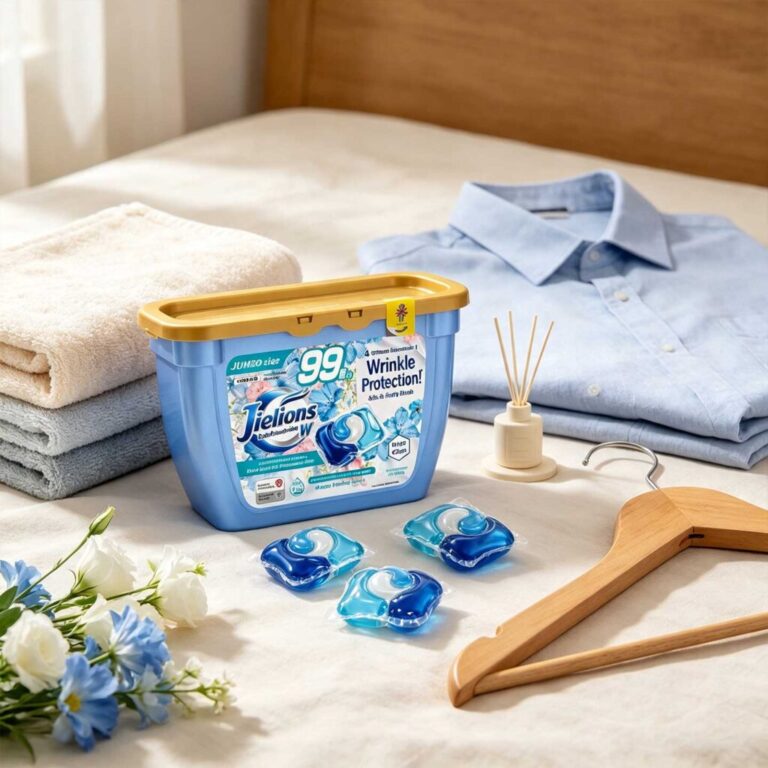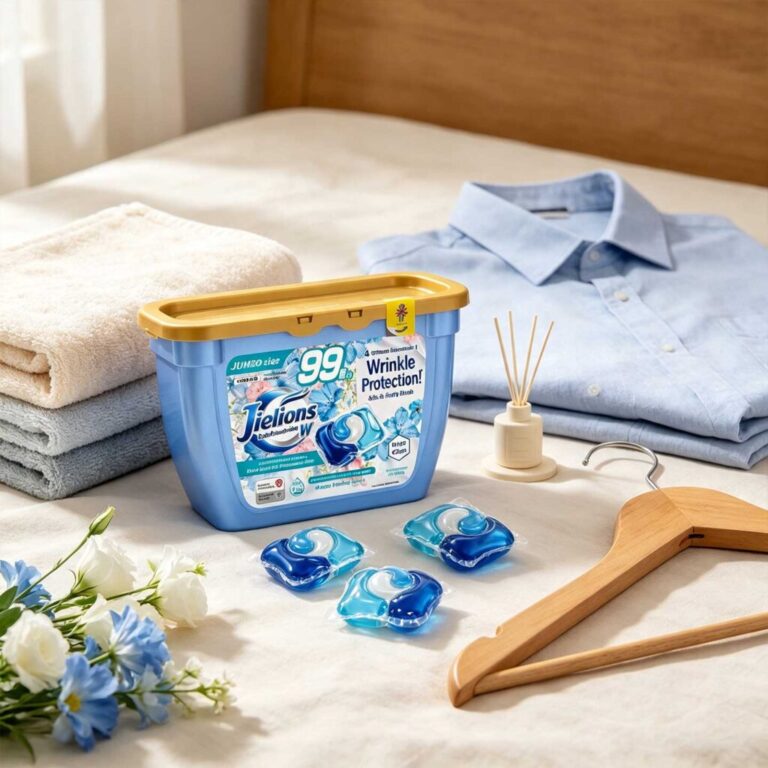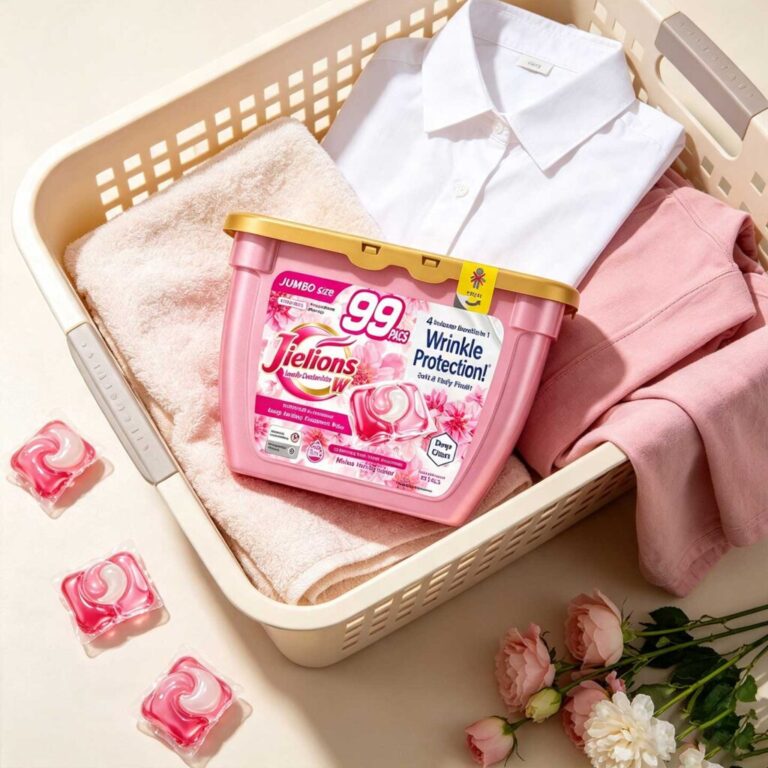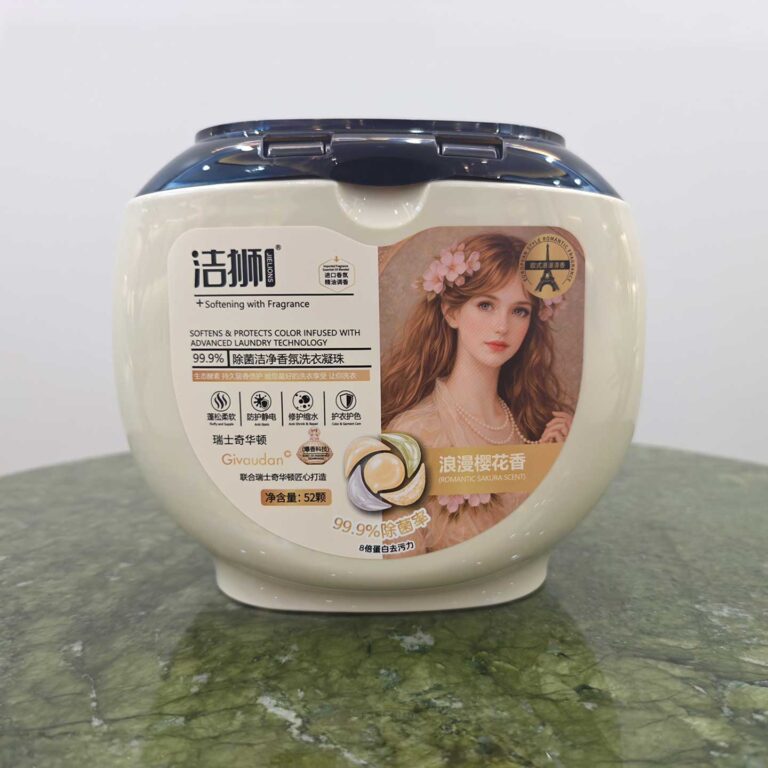
The premium laundry pods have become the fastest-growing segment in the global home care market recently. They offer the consumers the convenience of convenience, high cleaning power in compact form and multiple uses. Among the different laundry pods available in the market, the 4-chamber laundry pods are one of the most premium form of laundry pods available in the market. These laundry pods contain 4 different formulas in one single water-soluble capsule. Each chamber of the 4-chamber laundry pod is filled with a specialized formula that is released at the optimal time of the wash cycle to offer the highest cleaning performance. There is more to the seemingly simple 4-chamber laundry pods than meets the eye. Behind these laundry pods are highly advanced manufacturing processes including advanced laundry detergent formulas, encapsulation technology, strict quality control measures and continuous product testing. This article will explain the different stages of the production process of the 4-chamber laundry pods and how Guangdong Jieshi Biotechnology Co., Ltd. offers its laundry pod solutions to distributors and private-label brands all over the world.
What Makes Premium Laundry Pods Different from Conventional Ones?
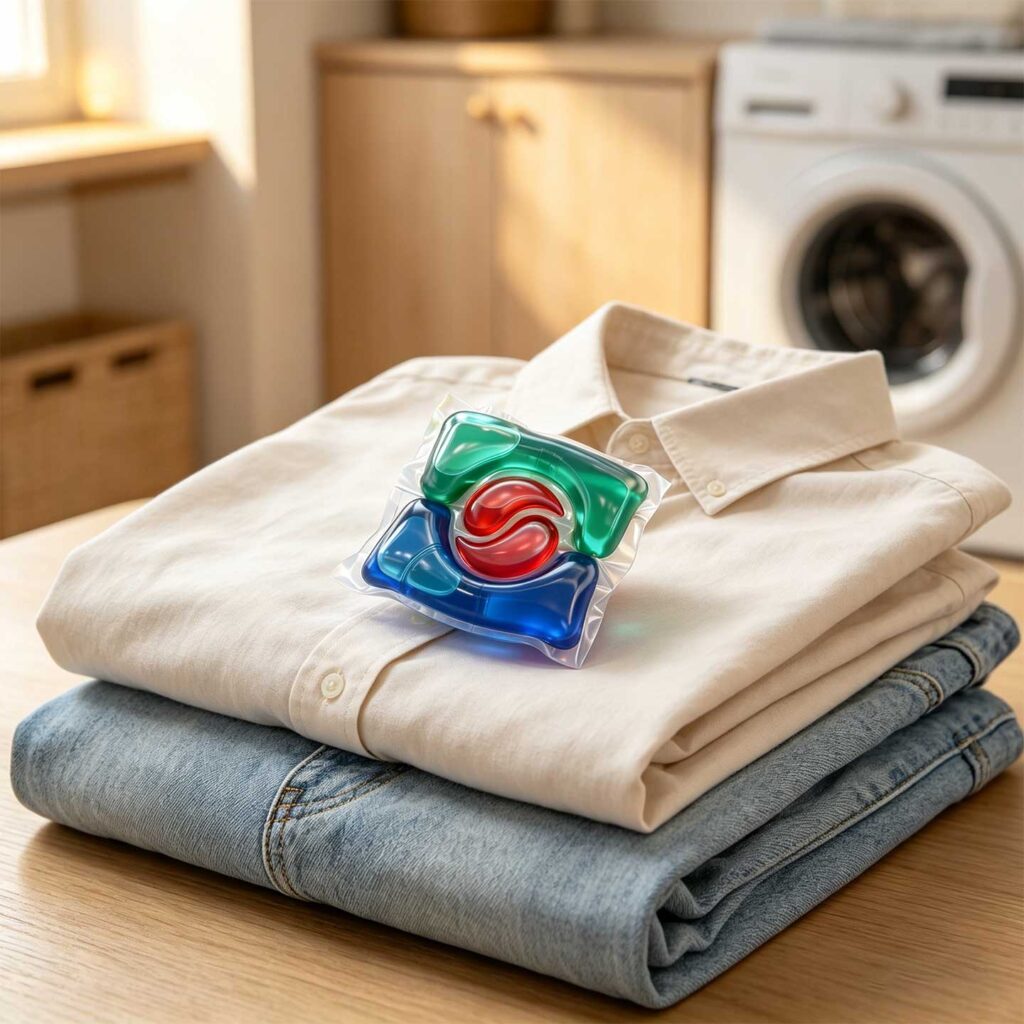
Premium laundry pods are the technological peak of laundry detergents. They offer a combination of the best possible washing results and innovative design. In contrast to single-chamber laundry detergent pods available on the market, the premium variants are equipped with multi-chamber systems. These enable the sequential release of all the different washing agents in the best possible way and thus guarantee optimal washing results.
Key Components of Premium Laundry Pods
Each premium pod is comprised of a precise mix of active cleaning agents, enzymes and fabric conditioning additives all engineered to work in concert to provide the deepest stain removal, the whitest fabrics and the best fabric care. Utilizing the latest in detergent technology, each pod contains a variety of powerful surfactants that are designed to remove a wide variety of different soils including proteins, oils and particulate dirt and do so even at low wash temperatures. Fragrance and fabric softening agents are also included to ensure that your clothes smell great and feel soft and warm to the touch after each wash. The outer film of the pod is made from polyvinyl alcohol, or PVA, which is 100% water soluble and completely leaves no residue. This outer film is engineered to dissolve at precise rates to release the pod’s internal ingredients in precise amounts.
An example of highly advanced formulation is: 4-Chamber Laundry Pods, Multi-Effect Clean & Long-Lasting Freshness. Its functions are: Detergent + Bacteria & Mites Removal 99.9% + Softener +Long LastingFragrances + Blend Enzymes. It therefore provides a number of different benefits in one simple-to-use laundry pod that offers high levels of hygiene and sensory satisfaction.
The Role of the 4-Chamber Design in Performance
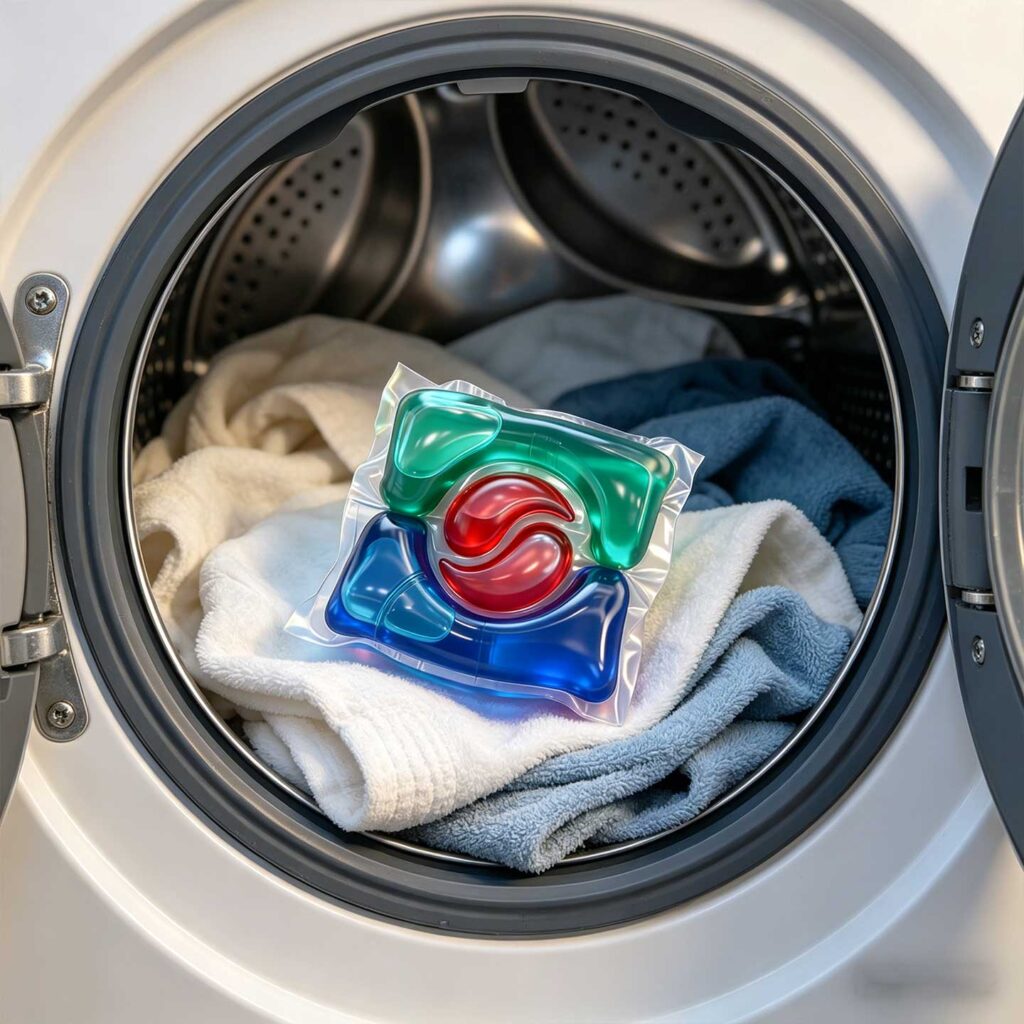
The four-chamber configuration revolutionizes detergent delivery. Each chamber contains different chemical compositions—detergent concentrate, softener, brightener, and fragrance booster—isolated to prevent premature interaction. This separation ensures chemical stability during storage while allowing sequential dissolution during washing. The process begins with high-alkaline detergent release for stain breakdown, followed by enzyme activation for deep cleaning, then softening agents for texture improvement, and finally fragrance dispersal for long-lasting freshness.
Fragrance that lasts longer, contained in microcapsules, releases fragrance factors continuously and attaches firmly to fabric fibers. This controlled-release is made possible by the multi-chamber technology and extends the fragrance-release in the wash cycle to after wash.
How Are the Ingredients Formulated Before Encapsulation?
Before the ingredients are even encapsulated in pods, they must first go through a very intense and rigorous preparation phase of measuring out and stabilizing them. The most critical factor in all of this is to try to keep the chemical ratios of all of the ingredients at a proper balance. Some of the most unstable ingredients to work with are things that have enzymes in them, as well as ingredients that are highly oxidized. The problem with these two categories of ingredients is that they are extremely sensitive to how they are handled chemically, and can very easily self-destruct and go bad in the blink of an eye if they are not mixed or measured out properly.
Ingredient Preparation and Quality Control
Raw materials first pass through purity testing to ensure compliance with safety standards such as ISO9001 or MSDS certifications. Mixing ratios are determined based on detergent concentration targets that align with performance benchmarks for soil removal and whiteness retention. Stabilizers are introduced to preserve enzyme activity and prevent oxidation of fragrances or surfactants over time.
Guangdong Jieshi Biotechnology Co., Ltd complies with international safety standards in production, as confirmed by MSDS/ISO Certificate.
Balancing Viscosity and Density for Multi-Chamber Filling
The physical liquid properties have to be set precisely in order to fill out the single chambers of a layerer. The viscosity has to be adjusted, because very thin liquids run out of the dispenser and very thick liquids do not fill up uniformly. For layered liquids the density has to be calibrated in order to avoid a separation of the phases in the storage tank as well as in the films of the layerer. In order to guarantee the homogeneity of the filled liquids during the filling process the temperature has to be regulated.
What Is the Step-by-Step Manufacturing Process of 4-Chamber Laundry Pods?
Making premium 4-chamber laundry pods is a complex task that requires combining materials, automation and quality control.
Film Preparation and Molding Process
First, we start by making the water-soluble PVA film for production. To start, large sheets of PVA film are cut to the appropriate size. These are then thermoformed into the desired mold shape under controlled temperature and humidity to maximize the dimensional stability of the resulting film. The thickness of the film affects how fast it will dissolve during washing, and while thinner films dissolve most quickly, they also require higher mechanical strength to withstand filling pressure.
Liquid Filling and Chamber Sealing Techniques
An Automated multi-nozzle dispenser can add layer by layer a pre-measured liquid formulation into individual chambers of a pod. It seals the periphery of the pod with heat or ultrasonic welding. An Optical sensor is used for fill accuracy check in real time and it rejects the product if faulty before sealing.
The precision-oriented design of 4-Chamber Laundry Pods, Multi-Effect Clean & Long-Lasting Freshness, is based on volume control of various detergent types and is maintained constantly. The specified quantities of 4-Chamber Laundry Pods, Multi-Effect Clean & Long-Lasting Freshness, are 10g, 11g, 12g, 19g/20g and 25g per pod.
Final Shaping, Drying, and Packaging Procedures
Dried in temperature controlled drying tunnels to remove moisture, the pods are then inspected automatically for shape and seal. Uniform pods are then packed into moisture barrier pouches or boxes to maintain shelf life.
Peckaging Boxes /Bags Pouches/Cartons or Customized is flexible enough to fit your market presentation needs whilst maintaining adequate product protection.
How Do Manufacturers Ensure Product Quality and Safety?
Our quality assurance is implemented across all production steps, from checking of raw materials to testing after manufacture. This ensures that also in large production batches the highest reliability is given.
In-Line Quality Monitoring Systems
An advanced vision system instantly detects any air lock or incomplete seal on items traveling along a conveyor belt. Advanced weight sensors verify the correct dosage of liquid is contained in each pod. These sensors are able to provide consistent and reliable control of automated cleaning systems, that are used by consumers, to tight tolerances to minimize the risk of human error.
Post-Manufacturing Testing Standards
Dissolution testing is conducted for finished products formulations at a range of water temperatures. The products are fully soluble with no film residue left on the surface. Stability testing at elevated humidity or temperature is also conducted to simulate storage conditions encountered during transport. No leakage or deterioration of the product is allowed.
These extensive tests are a guarantee of the highest quality products and services to our clients and are in line with Guangdong Jieshi Biotechnology’s commitment to its customers, as stated on the company’s website: We are committed to providing you with personalized service. If you have any questions, please contact us.At here, it’s all about giving the clients thebest quality products.
Why Choose Guangdong Jieshi Biotechnology Co., Ltd as a Reliable 4-Chamber Laundry Pods Supplier?
Guangdong Jieshi Biotechnology Co., Ltd, a high-end laundry pods manufacturer, boasts of cutting-edge technology and global standard quality. JIESHI Biotechnology’s brand JIELIONS encompasses Green Chemistry and Human-centric Design specially designed for the International Markets.
Core Strengths of Guangdong Jieshi Biotechnology Co., Ltd
Vittimum uses fully automated filling lines with multi-chamber filling technology, that precisely fills even very sensitive enzyme blends as well as sensitive fragrance microcapsules. Vittimum’s production is carried out in conformity with the high standards set by the ISO standards and is environmentally friendly, also when using biodegradable packaging materials, such as PVA films.
Origin Guangdong Province,China – Our manufacturing base is strategically located in China’s main industrial hub and is able to service worldwide OEM/ODM exports efficiently via multiple logistics networks.
Customization continues to be a core offering. We can create any fragrance, color or combination of functions that a client requires to meet the needs of local consumers, providing market penetration under a private-label structure.
Conclusion: The Precision Behind Every Premium Pod
Modern chemical engineering consists of several processes, some of which can be applied to the production of premium 4-chamber laundry pods in the form of high-quality formula and precision automation. This refers to the selection of formula components as well as the use of encapsulation technology. After the liquid formula has been filled into a pouch made of special material, the packaging undergoes strict quality checks to prevent leakage during washing and to ensure optimal washing performance and textile care. And to that end, a leading supplier of laundry detergent packets of different sizes and with varying formula compositions, Guangdong Jieshi Biotechnology Co., Ltd., has continued to explore new areas of application of the products while seeking ways to make them more eco-friendly, enabling them to not only clean better but also inspire confidence in consumers of the high quality of products manufactured through the latest chemical engineering technology.
FAQs
What materials are used for the outer film of laundry pods?
The outer layer of washable filters is typically made of polyvinyl alcohol (PVA). PVA is biodegradable and 100% dissolvable in water. It completely dissolves and leaves no residue after washing.
How do manufacturers prevent chemical reactions between different chambers?
The individual chambers are welded together with utmost precision. Thus, the reactive components are separated from each other until the water contact during the laundry process releases the individual components step by step.
Can 4-chamber laundry pods be customized for specific markets or fabrics?
Yes, there are manufacturers, such as Guangdong Jieshi Biotechnology Co., Ltd, who design special formulations for their detergents and cleaning products, such as increasing the enzyme concentration, fragrance intensity or the surfactant strength. These special formulations are designed in accordance with the requirements of the market and/or the sensitivity of the textile.