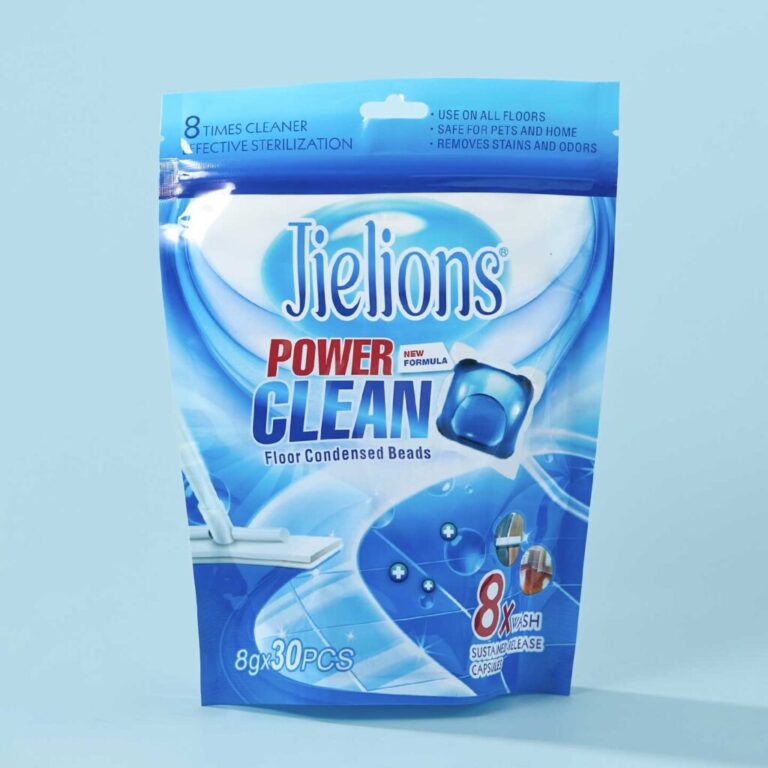
Two floor-cleaning bead samples can look similar on a sourcing desk, yet call for very different labels or packaging. One may be intended for a floor scrubber’s clean-water tank; another might be positioned for a different cleaning routine. If the buyer compares only the number of beads and a price per pack, those differences can disappear until the first sample review.
For a private label launch, the useful question is not simply “Can you make floor cleaning beads?” It is “Can the supplier make the version our customer can use correctly, with a pack and instructions that fit our market?” This guide uses the JIELIONS Floor Cleaning Beads category and its published OEM/ODM process as a starting point, while separating public product information from details that need confirmation for a specific order.
What Makes Floor Cleaning Beads Different?
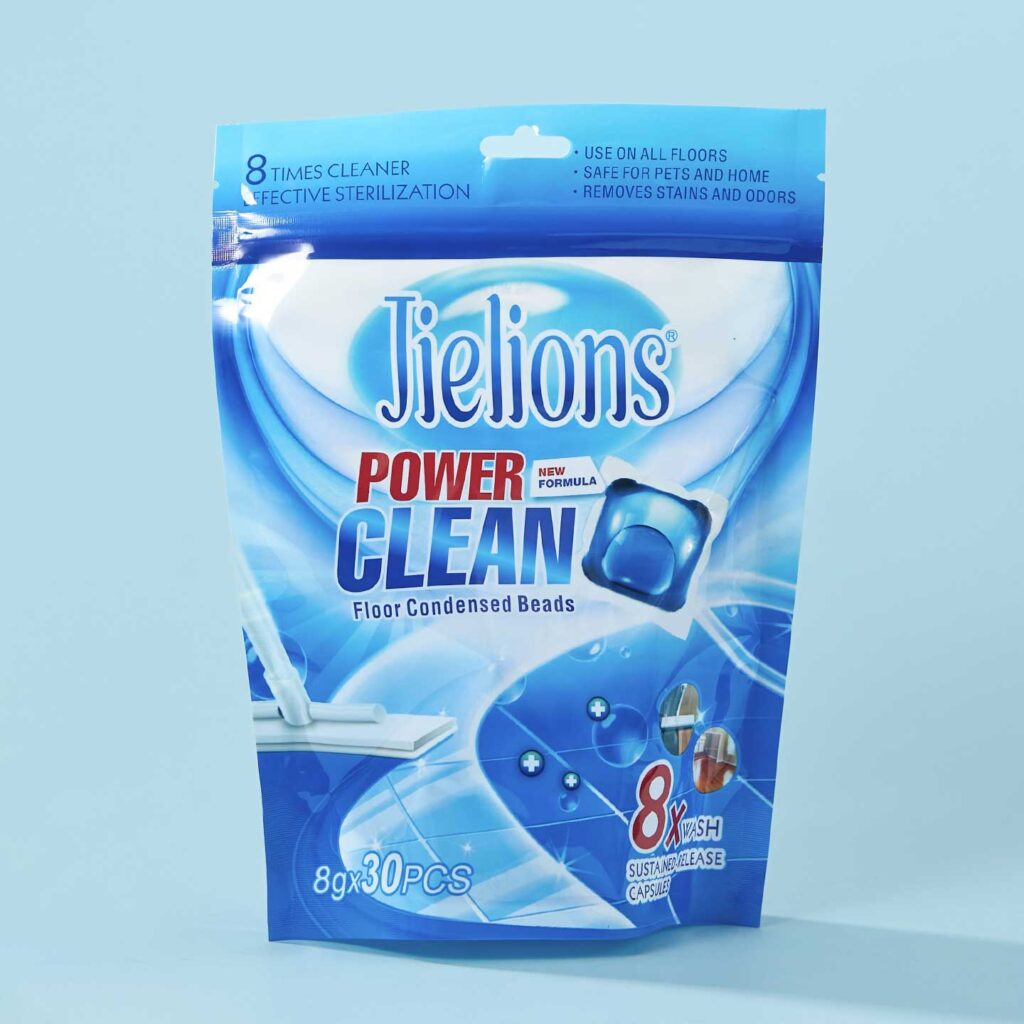
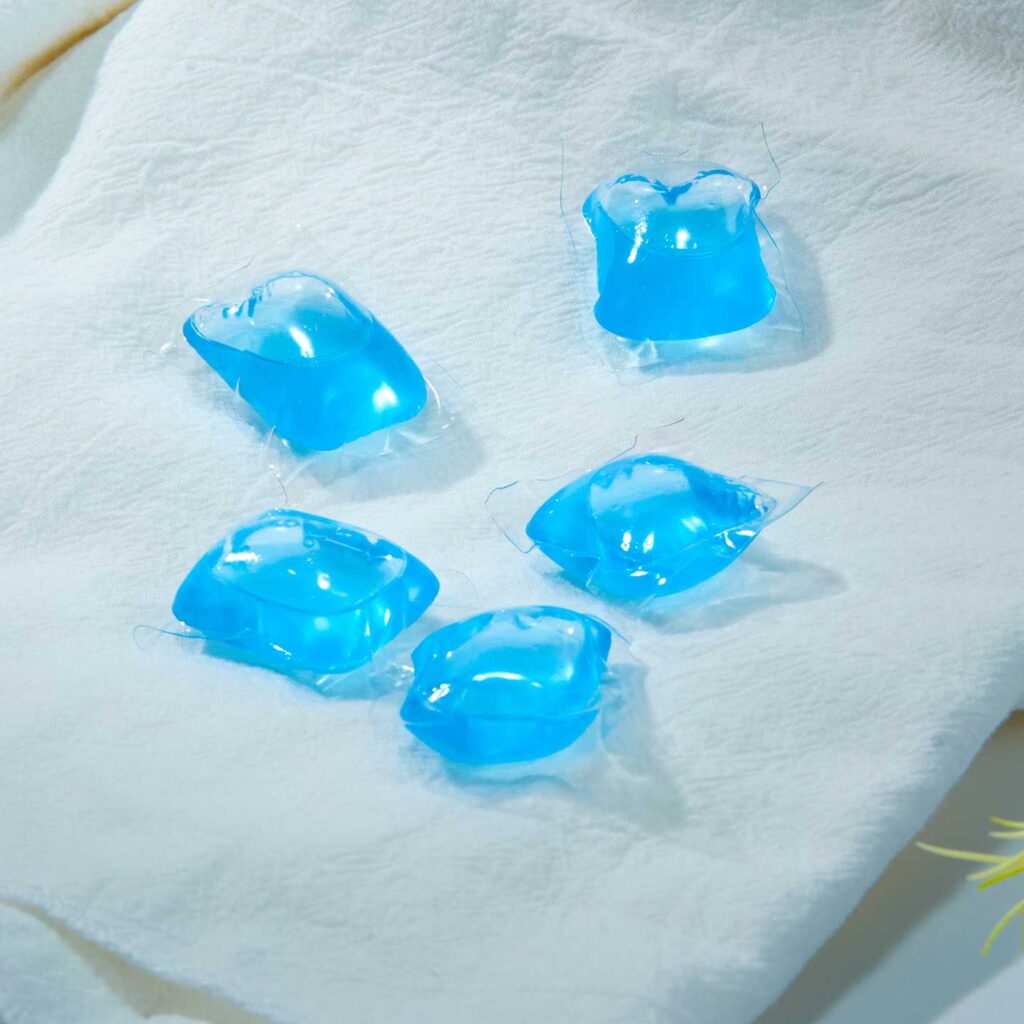
Floor cleaning beads are pre-portioned cleaning products intended to dissolve in water before use. A measured bead can simplify the consumer’s routine by removing the need to pour liquid from a bottle. That convenience, however, only works when the instructions identify the right water volume, application equipment and handling method.
On the JIELIONS product listing, the company describes a water-dissolving bead format and discusses use with floor scrubbers. It also advises checking machine compatibility before use. Those are relevant product-selection points. Claims about broad floor compatibility, sterilization, protection or extended fragrance should not be carried into private label artwork without evidence for the proposed formula and destination market.
Begin with the Actual Cleaning Routine
Decide where and how the bead will be used
Write a short consumer-use sentence before requesting a quotation. For example: “Routine household hard-floor cleaning using a compatible floor scrubber.” It is a clearer starting point than “multipurpose cleaning bead,” because the supplier can see which instructions and tests will matter. If a brand plans a manual-mopping version as well, request confirmation rather than assuming both routines use the same formula and dose.
JIELIONS states that its listed floor cleaning bead should be placed in the clean-water tank before adding normal-temperature water, then allowed to dissolve. It warns against placing a bead in the dirty-water tank or directly on the scrubber. For a commercial SKU, the buyer should confirm the exact tank procedure and water volume with a sample label and the manufacturer; the website instruction alone is not a final dosing specification.
Check the floor and the equipment separately
A tile floor, a sealed wood floor and an untreated wooden surface present different review questions. For sensitive materials, the JIELIONS page recommends testing a small, inconspicuous area first. A general “safe for all floors” statement on a concept pack is not enough to settle that test.
Machine compatibility needs its own check. Some scrubber manufacturers restrict third-party cleaners or specify acceptable solution types. Ask whether the target models permit cleaning agents in the tank, whether the formulation is suitable for the equipment, and whether its use could affect the machine warranty. Do not promise compatibility with every model without validation.
Write a Product Brief That Can Be Quoted
A useful floor cleaning beads brief gives the supplier a defined product to price and sample. Buyers do not need a complete formula at the first contact, but they do need to remove avoidable ambiguity.
• Intended use: target flooring, manual cleaning or identified floor-scrubber use, and any specific equipment constraints.
• Dose and presentation: proposed number of beads per pack, net content if known, and the water-volume or use-direction question to be confirmed by testing.
• Pack route: first-use tub, resealable pouch or refill; expected opening, resealing and storage behavior.
• Commercial destination: target country, language, channel, artwork status and initial order-volume range.
• Product evidence: required ingredient, safety, cleaning-performance or material-compatibility documents; specify what needs supplier confirmation.
Keep proposed figures clearly marked as provisional. If “30 beads” is only a planning example, it should not quietly become a locked production quantity. A quotation based on one pack configuration cannot be compared directly with a sample made for another.
Choose Packaging Around the Customer’s Use
A rigid first-use pack may make sense when the product needs shelf presence, easy dispensing and storage after opening. A refill pouch can serve repeat buyers, but only if the instructions explain where the beads go after the pouch is opened and how they should be kept dry. The container is not just an artwork decision: it changes the handling experience.
JIELIONS discusses packaging and formula customization through its OEM/ODM service. That supports a conversation about options, not an assumption that any requested pouch, count, material or lead time has already been approved for this particular product. Ask the supplier what pack formats can be sampled for the selected formula and target market.
Ask for Evidence Before Approving Label Claims
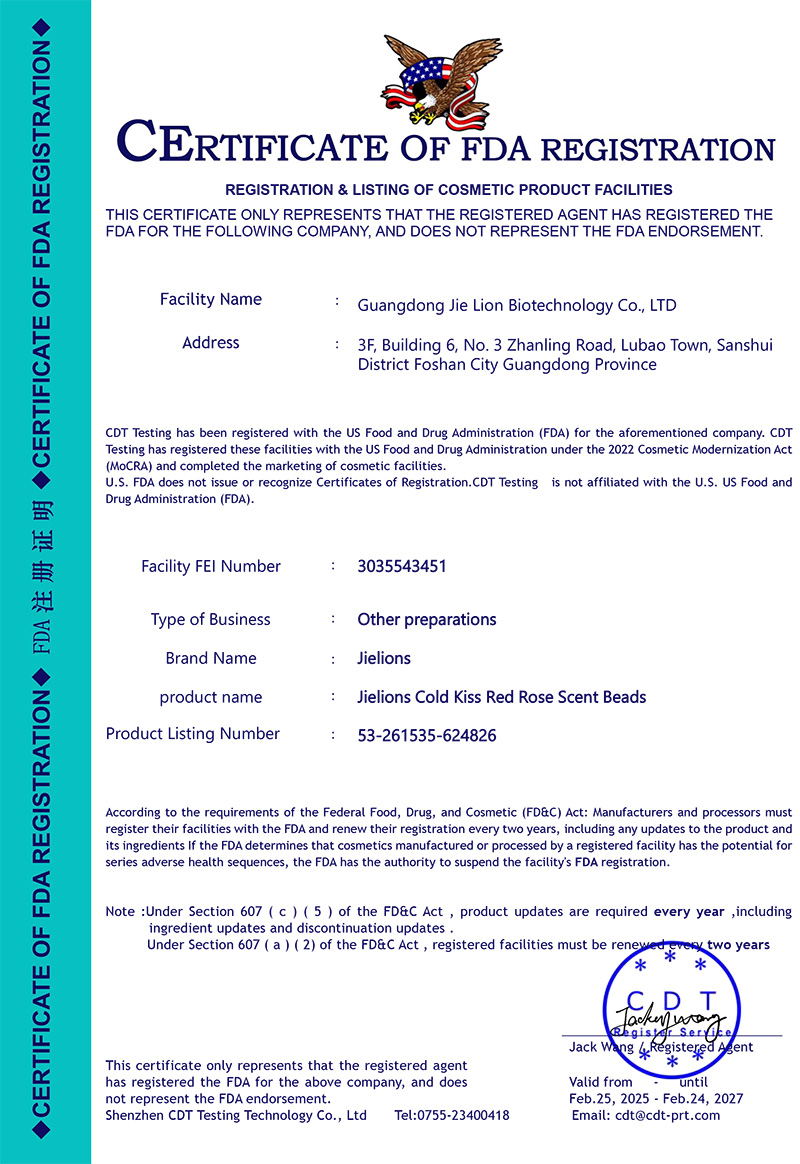
A buyer can review appearance, opening and instructions with a simple physical sample. Statements about cleaning performance, bacteria reduction, floor protection or fragrance longevity are different: they require product-specific support and may be regulated differently by market. Treat those claims as proposed wording until the supplier provides relevant testing, a specification and approval for the destination country.
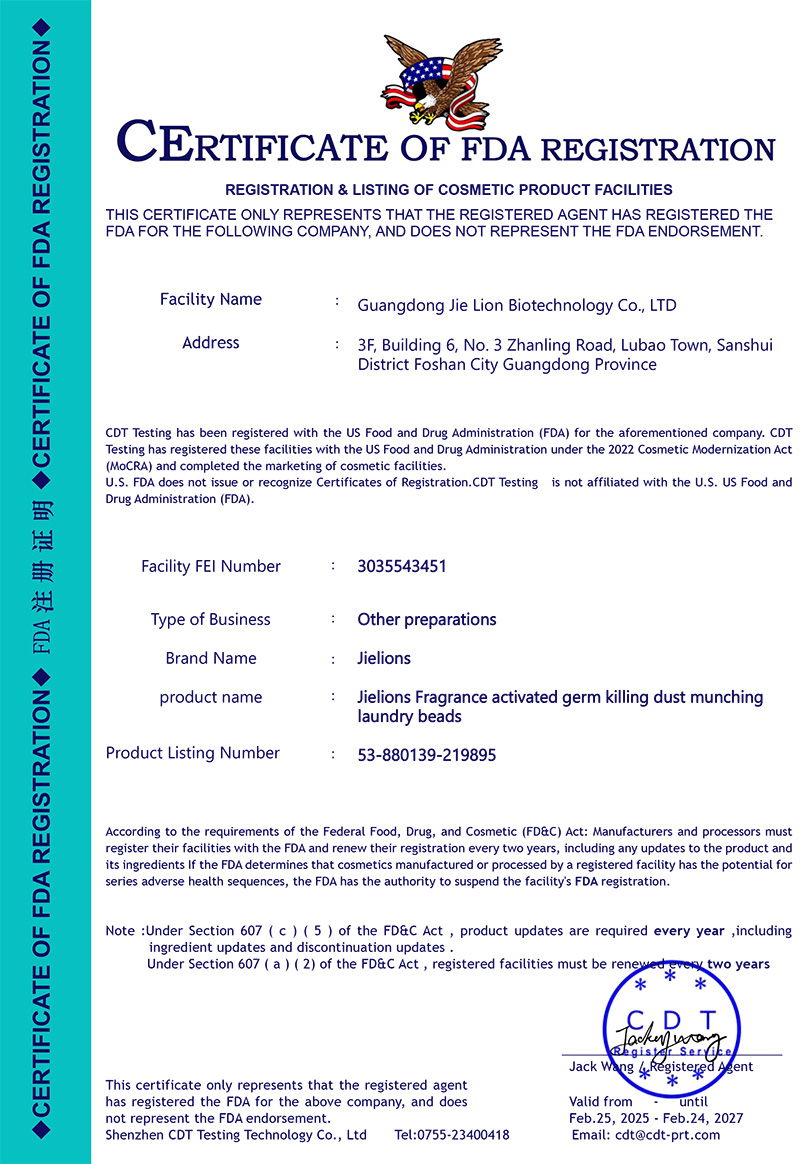
This distinction matters on the current JIELIONS listing. Its floor-cleaning description contains product-related use guidance, while a separate attributes section includes references to clothing and fabric softening. Those are not sound evidence for a floor-cleaning SKU. The private label brief should be built around the intended floor application rather than copying every statement from a web page.
For safe handling, confirm the final label directions for keeping beads sealed, cool and dry and out of reach of children and pets. The published product guidance also discusses eye contact and sensitive skin. Ask the manufacturer to supply the approved safety language for the target market rather than rewriting safety text from memory.
Send an RFQ That Produces Comparable Offers
A short RFQ can prevent weeks of email follow-up if each line describes the same product. State the use case, target surfaces, proposed pack, count or weight, label language, sales channel and destination. Then ask the supplier to separate what is already available from what would require development or new testing.
For pricing, request a clear inclusion list: filled product, primary pack, closure or seal, printed label, sampling, formulation work (if any), and delivery terms. The reply should identify which sample code and artwork version the quotation covers. If the supplier offers a cheaper refill instead of the first-use tub, treat it as a different scope rather than a discount.
Use a real sample to close the information gaps
Take the sample through the same actions as the intended customer. Read the directions at normal print size; inspect the closure; use the product only in a suitable test setup; and observe dissolution and any residue in line with the agreed test method. For a scrubber version, review the exact equipment and water-tank instructions first. Where applicable, test the cleaning result and surface response under documented conditions.
Record observations before judgments. “The preparation step is missing from the label” is actionable. “The product is bad” is not a useful supplier note without a test result. Keep the sample code, RFQ version, packaging drawing and approval date together so a revised sample is not mistaken for the approved one.
What Can JIELIONS Support for Private Label Buyers?
The JIELIONS household cleaning range includes floor cleaning beads alongside other home-cleaning products. Its OEM/ODM information describes demand matching, sample development, validation, production and quality-control stages. This makes it a relevant supplier to approach about a defined private label concept, but a buyer still needs an actual quotation, sample and product-specific supporting documents.
When making contact, include the intended use, surface or machine constraints, expected pack, target market and one or two unresolved questions. A focused brief allows the supplier to answer whether the requested configuration can be developed and sampled. Use the JIELIONS contact page to submit those details.
Conclusion
Choosing floor cleaning beads is less about selecting a color or comparing pack counts than defining a product people can use correctly. Confirm the application and compatible surfaces first; then agree on dosage directions, packaging, safety language, performance evidence and a sample that matches the quotation. Once those items describe the same SKU, the brand has a workable basis for approval.
FAQs
Can floor cleaning beads be used in every floor scrubber?
No universal compatibility should be assumed. Check the machine manufacturer’s guidance on third-party cleaning agents and test the proposed bead formula in the intended equipment. JIELIONS itself advises buyers to confirm machine compatibility before use.
How many floor cleaning beads should be used each time?
The correct amount depends on the actual product specification, water volume and cleaning method. Although the JIELIONS listing describes a pre-portioned format, the final private label instructions and sample tests must confirm the dose for the proposed SKU.
Which is better: a first-use tub or a refill pouch?
Neither is automatically better. A first-use pack may simplify initial storage and dispensing, while a refill can suit repeat purchases. Compare the opening method, storage requirements, instructions, count, packaging cost and what the customer must already own.
What should a brand request before mass production?
Request a confirmed formula/sample reference, pack and artwork versions, approved use directions, relevant safety and performance documents, quotation scope and market-specific labeling review. Any change to a use direction, count or pack format should trigger a new approval check.