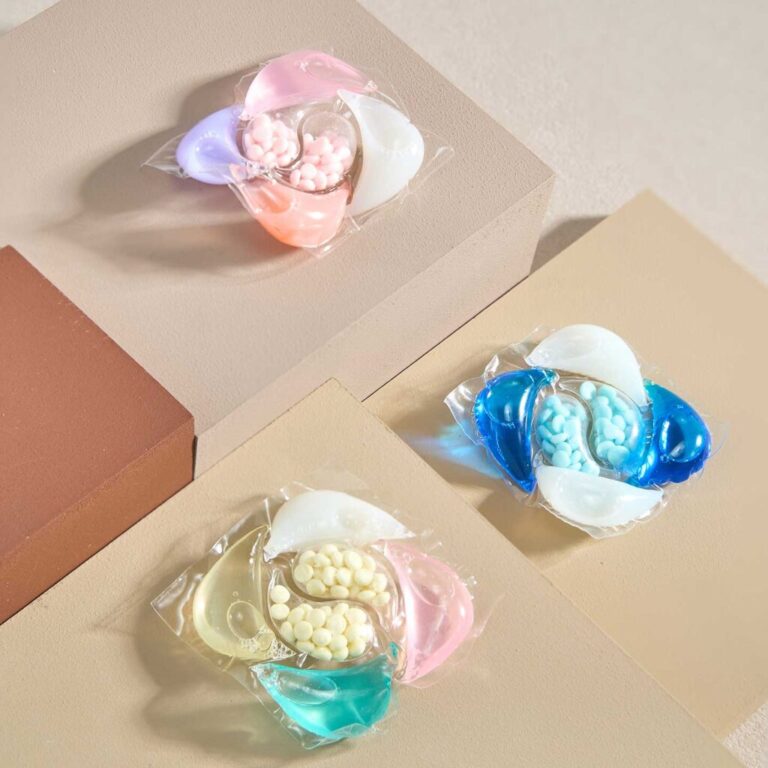
A six-chamber pod looks advanced, but its value depends on the complete dose. The Jielions 6-in-1 laundry pods combine detergent, softening, fragrance, blended enzymes, and stated bacteria- and mite-removal functions in a 15 g unit. The format offers several care functions in one premeasured product. Still, more chambers are not automatically better: formula quality, film dissolution, sealing, dosage, wash conditions, and credible claim support matter more.
What Does a Six-Chamber Laundry Pod Actually Do?
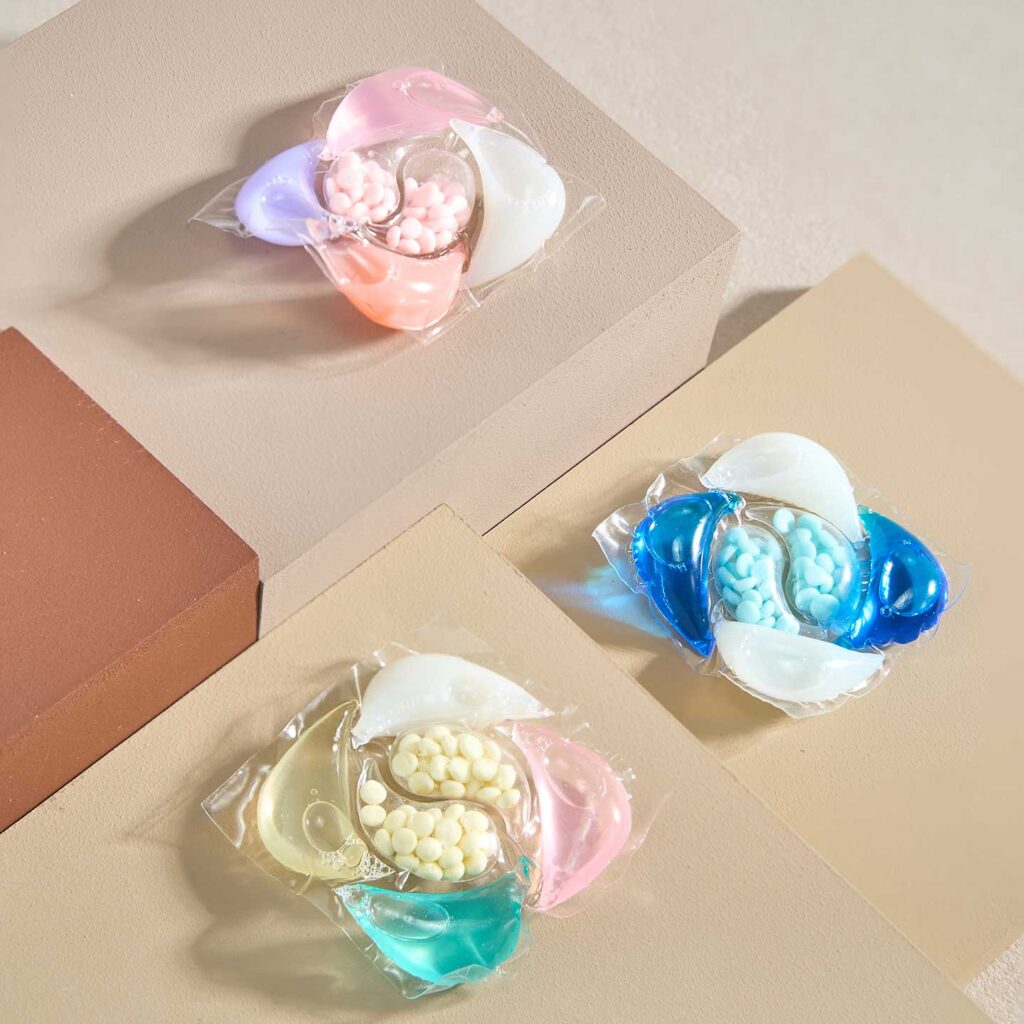
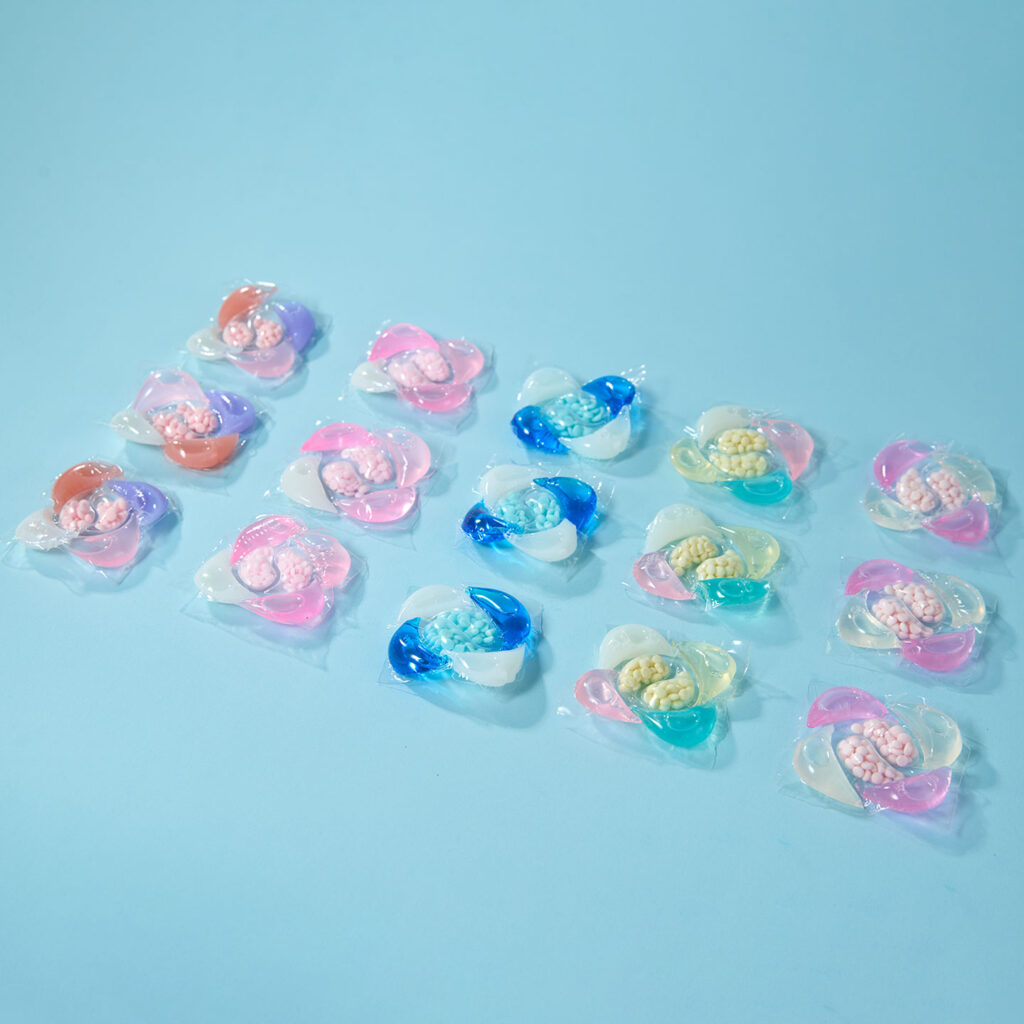
Six-chamber laundry pods divide a single wash dose into several visible compartments. The design can give formulators more room to organize different liquid portions while offering consumers one simple unit to place in the drum.
Why separate the formula into multiple chambers?
Separate compartments can keep selected formula portions apart before use, create a multi-benefit presentation, and balance cleaning, fabric care, enzymes, and fragrance. Their purpose varies by formula, so buyers should not assume that every color represents a universal ingredient or timed release stage.
Which functions can a six-chamber format combine?
A six-chamber product may unite a primary detergent base with complementary functions such as enzyme cleaning, softness, odor care, or fragrance. Jielions lists blended enzymes, softener, and long-lasting fragrance among the functions of its six-chamber model. Consumers comparing laundry detergent pods should read the product label rather than infer performance from chamber count alone. Any antibacterial, mite-removal, or percentage claim should be evaluated against the test method and documentation applicable to the finished product and target market.
Are More Chambers Always Better?
More chambers can support a differentiated formula concept, but they also create more interfaces that must be manufactured consistently. A well-designed three-chamber pod may outperform a poorly optimized six-chamber pod in a particular washing condition.
When can extra chambers be useful?
Extra compartments are useful when they serve a clear formulation or positioning goal, such as separating selected components, presenting multiple benefits, or creating a distinctive premium product. Those advantages matter only when the pod remains stable in storage and dissolves as intended in real wash cycles.
What does chamber count fail to prove?
Chamber count does not prove stain removal, cold-water dissolution, fabric safety, fragrance duration, or washer suitability. Performance comes from the complete system: concentration, film, seal integrity, fill accuracy, packaging, and directions. The best product is validated for its intended customer and wash conditions—not simply the capsule with the most sections.
How Do Six-Chamber Pods Compare With Other Multi-Chamber Pods?
Three-, four-, five-, and six-chamber pods belong to the same broad multi-compartment category, yet their design priorities can differ. Comparison should focus on use case and evidence instead of treating the numbers as a quality ranking.
What changes as chamber count increases?
A design with more chambers may allow a more segmented visual layout and additional formula portions, but it also demands precise filling and dependable seals. Fewer chambers can provide a simpler structure and may still deliver all the benefits a target shopper needs. Brands exploring OEM and ODM multi-chamber solutions should begin with the desired cleaning task, consumer promise, dose size, price position, and packaging format. The chamber architecture should follow that brief rather than lead it.
Who may prefer a six-chamber product?
The format may appeal to consumers who value an all-in-one routine, premeasured dosing, fragrance, and distinctive design. It can also suit a premium line extension. A shopper focused on basic cleaning may prefer a simpler pod. The right match depends on laundry habits, wash program, preferences, and budget.
What Should Consumers Check Before Buying?
A practical buying decision starts with the label and the way the product will actually be used. Look beyond front-of-pack chamber graphics and review the full directions, warnings, and supported benefits.
Does the dose suit the load?
Check the recommended number of pods for normal, large, or heavily soiled loads. The Jielions six-chamber model is listed at 15 g per unit, but users should still follow the final retail label because dosing can vary by formulation, load size, and market. Place the pod where instructed—commonly in the empty drum before clothing—and avoid overloading the machine so water can circulate and dissolve the film.
Will the pod dissolve under real wash conditions?
Consider cold or short cycles, water hardness, washer type, and storage. Keep pods sealed and dry. If residue appears, review load size, drum placement, cycle length, and temperature. Always store capsules away from children and pets and handle them with dry hands.
What Should B2B Buyers Test Before Launch?
For retailers, importers, and private-label owners, a six-chamber concept should move from visual appeal to a documented product specification. Samples need to be assessed under conditions that reflect the target market.
Which quality checks matter most?
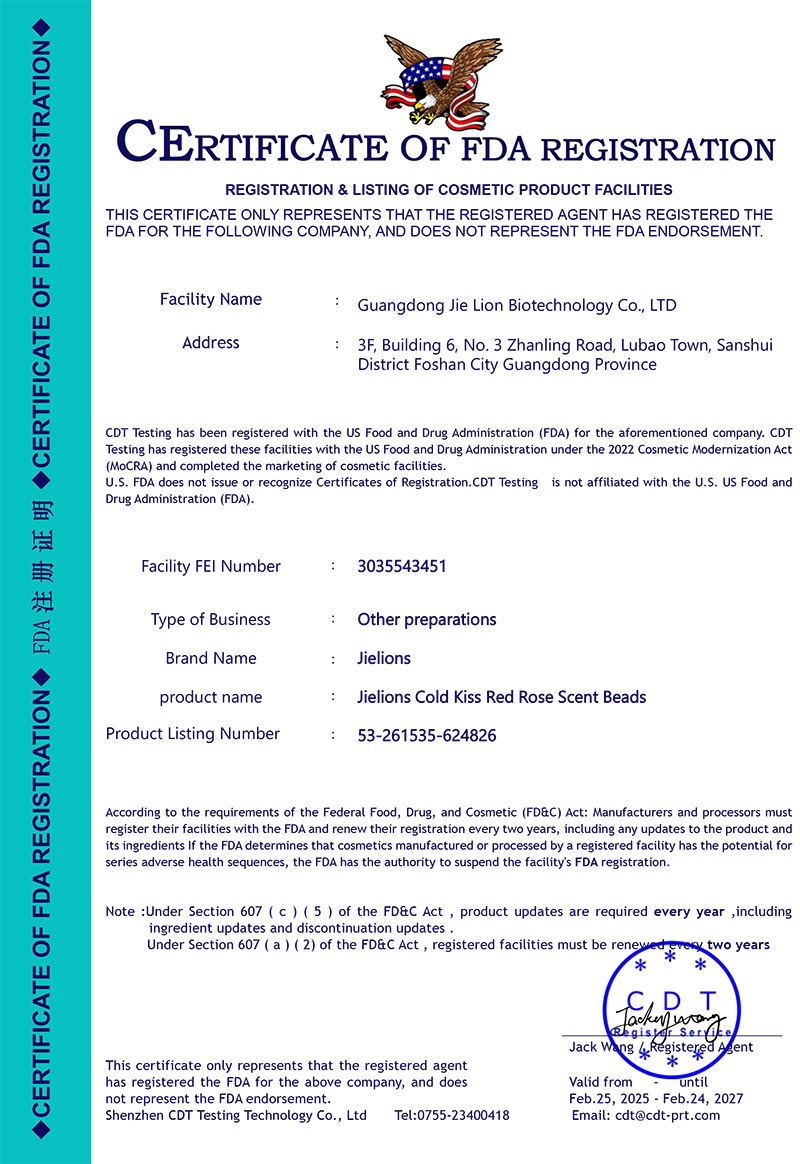
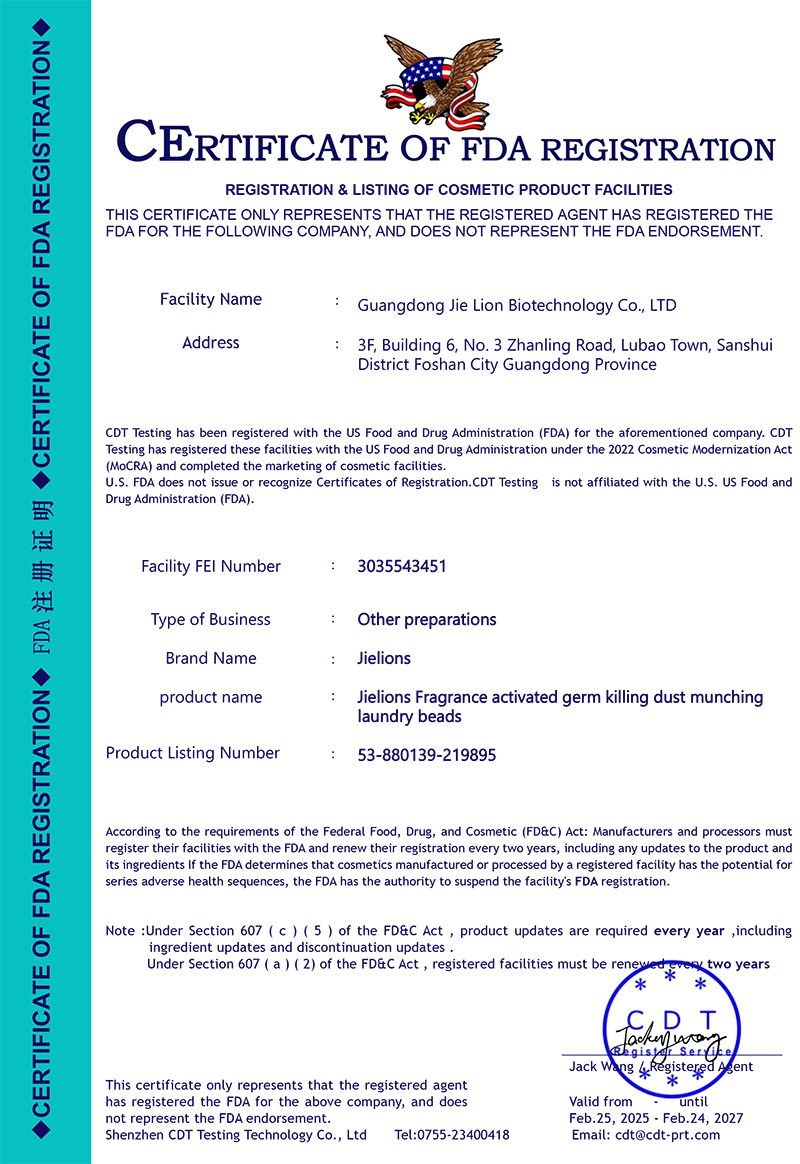
Review fill-weight consistency, sealing, leakage resistance, dissolution, stability, packaging protection, and cleaning performance across relevant wash conditions. Claims should match the finished formula and evidence. Check certifications and reports for scope, issuing party, and relevance; they are not blanket proof of every benefit.
Which customization decisions belong in the brief?
Define the target consumer, required functions, 15 g or alternative dose, fragrance direction, colors, pack count, pouch or box format, label language, and destination-market requirements. A clear brief makes it easier to decide whether six chambers add genuine product value. Jielions states that rose or freesia fragrance, green or yellow colors, and bags, pouches, boxes, or cartons can be customized, subject to the final development agreement.
Why Work With Jielions on a Six-Chamber Pod Project?
Guangdong Jieshi Biotechnology Co., Ltd. presents Jielions as a laundry and household cleaning product manufacturer. Its six-chamber page provides a concrete starting specification, including a 15 g unit, blended-enzyme and fabric-care functions, customizable fragrance, color, and packaging, plus listed MSDS and ISO documentation. Buyers should confirm the exact scope and current validity of documents for their chosen formula.
For brand development, the company’s OEM and ODM services can be used to discuss formula positioning, chamber appearance, fragrance, packaging, and market requirements. A responsible project should still include sample approval, performance testing, stability checks, packaging validation, and review of all proposed claims before production.
Conclusion
Six-chamber laundry pods can package several cleaning and fabric-care functions into one convenient dose, and their segmented appearance can help a brand communicate a multifunctional concept. However, six is not a magic quality number. Consumers should judge the label, dose, dissolution, storage guidance, and supported benefits. B2B buyers should evaluate formula performance, film and seal quality, stability, packaging, compliance, and claim evidence. More chambers are better only when each design choice contributes to a reliable product for the intended wash conditions and customer.
FAQs
Do six-chamber laundry pods clean better than three-chamber pods?
Not necessarily. Cleaning depends on formula concentration, ingredient system, dose, film dissolution, washer conditions, and correct use. More chambers can support a more segmented formula, but chamber count alone does not prove better stain removal.
Can six-chamber laundry pods be used in cold water?
That depends on the specific film, formula, cycle, and label directions. Buyers should test cold-water and short-cycle dissolution, while consumers should follow the final product instructions and avoid overloading the drum.
Are six-chamber pods suitable for private-label customization?
They can be. A private-label brief may cover functions, fragrance, colors, dose, package type, pack count, and target-market documentation. Samples and finished products should be validated before claims are finalized or production begins.